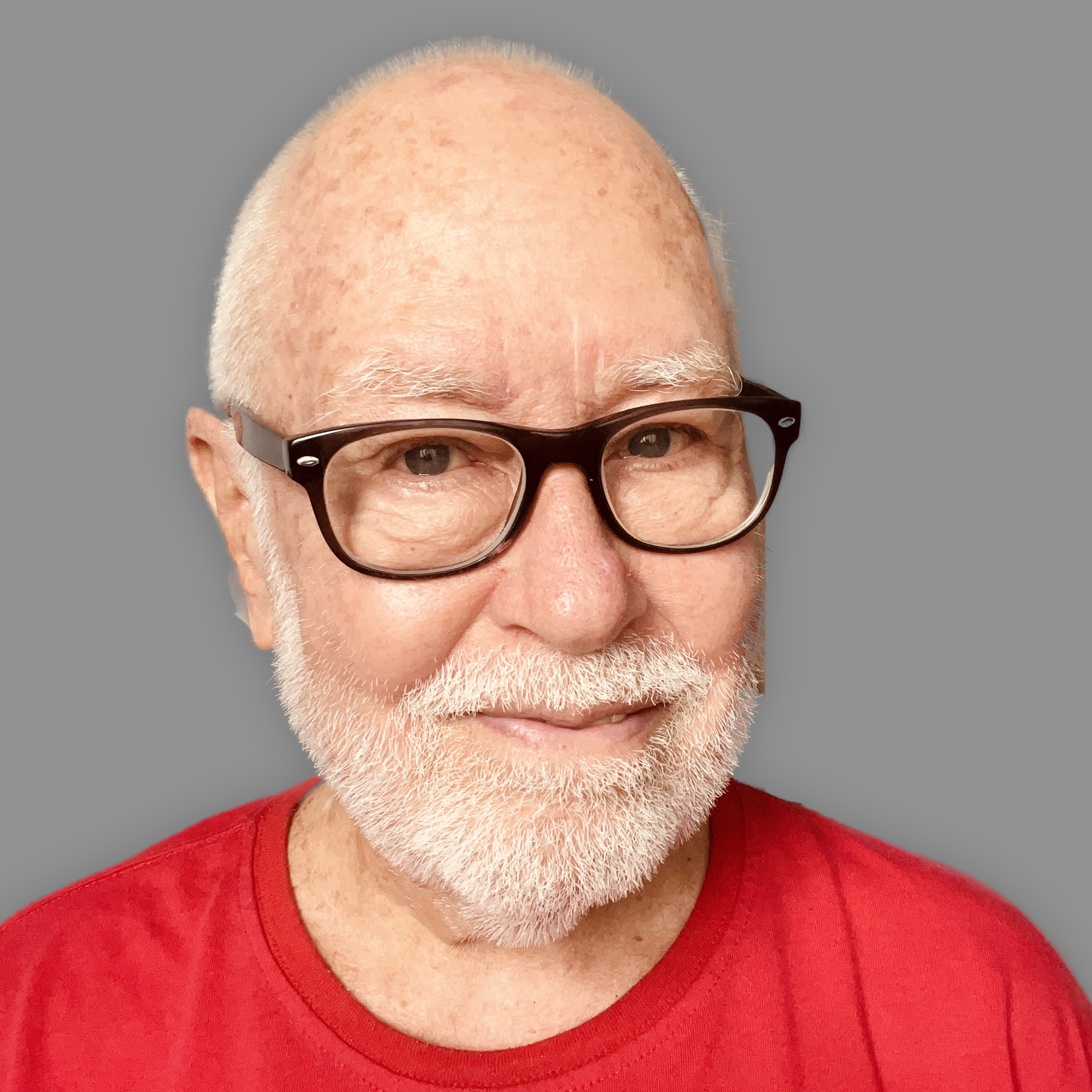
I. The Musician
I grew up in an affluent northern New Jersey bedroom community, interested in everything — primarily science and art, but also Latin, Greek, and mathematics, the roots of culture and thought. I was judged a mediocre student; I cared little for grades, much for knowledge itself. I could often be found in the library, haunting the adult stacks my mother had given me permission to browse freely.
My actual potential surfaced late and suddenly: perfect 800 scores on almost all my College Board tests — the one 780 was in History, never much of an interest. Invitations arrived from several top schools, including a scholarship offer from MIT in Nuclear Physics. I turned them all down to attend a local music school, specializing in jazz performance and composition.
I won or placed in every student competition I entered. Before graduation I had several job offers. I took one close to home, working with a prominent New York ad agency producing tracks for commercials and freelancing music for films.
The agency lasted eighteen months. The hypercompetitive reality of the music business conflicted with my idealistic views on art and life. I hit the road for the West Coast — San Francisco, in the Summer of Love.
I wound up in Forest Knolls, then a haven for artists, musicians, and hangers-on, living in a rented room in Janis Joplin's house (she was never there). The Grateful Dead lived down the road. The parties were so wild I don't remember a thing about them. I played in several bands simultaneously, as did most of my friends and colleagues. Sometimes we got gigs — sometimes even got paid for them. Sometimes I woke up under the great forest pines of the Marin County hills, remembering little of how I got there.
Then one day my Indian music teacher, Ali Akbar Khan, told me: "You are not cut out to be a performing musician. Your heart is too soft. You should be a temple musician, making music for God." I had no idea what that meant. He arranged to introduce me to his childhood friend, who happened to be a world-famous spiritual teacher with students and temples across the world. Given the intimate introduction, he accepted me as a special disciple.
II. The Disciple
My dissolute hippie life transformed rapidly into the life of a Vedic disciple. I traveled the world, leading kīrtans — group devotional chants — living in temples and āśramas on several continents. The structure of that life was demanding and clarifying in equal measure: early mornings, sustained practice, the company of others who had made the same commitment. Something in me that had been restless found, for a time, its ground.
But when my spiritual master passed away, it was as if someone turned off the lights. The idealistic āśramas fell into politics and succession disputes. The magic left. I found myself without a teacher, without a community, and without a clear direction — looking for a new way to be in the world.
I found it back in California, in Silicon Valley.
III. The Engineer
I came to software in the late 1970s, when it still felt like something genuinely new — a domain where precision of thought produced real effects in the world, where a clear specification meant something, where the gap between intention and implementation was navigable by someone willing to think carefully enough.
I was good at it. More importantly, I found it satisfying in a way that surprised me: not the cleverness of code, but the discipline of systems thinking. The requirement to understand what you were building before you built it. The way a well-formed architecture held together under pressure while a poorly conceived one fragmented at the first unexpected input. These felt like principles that extended beyond software — principles about the relationship between clarity of understanding and the quality of what you could create.
But something was missing. The questions the work kept raising, it could not answer. What was the understanding being applied to? What was the knowing subject behind the systems I was building? The discipline of software architecture pointed toward a deeper question about the nature of mind itself — and that question, it turned out, had been addressed with far greater precision in other traditions than in anything the Western intellectual world had to offer.
I left and went looking again. This time, more deliberately.
IV. The Independent Sādhu
What followed were decades of travel and study that I find difficult to summarize without making it sound either more exotic or more systematic than it was. It was neither. It was the experience of someone genuinely interested in understanding — following the question wherever it led, staying long enough in each place to encounter the tradition on its own terms rather than as a tourist passing through.
I spent years in India, studying and practicing within the Śākta and Śaiva Tāntrik traditions — not the popular Western appropriation of those terms, but the actual living transmission as it exists in the subcontinent, passed from teacher to student in the manner it has been transmitted for over a thousand years. I encountered the Advaita Vedānta of Śaṅkarācārya not as a philosophical system to be read about, but as a practice of inquiry to be lived — sitting with teachers who had given their lives to it, learning to distinguish the knowing subject from the objects it knows — not as an intellectual exercise but as a direct investigation of experience.
I studied Buddhist Dharma in its Theravāda forms — the original teachings of the Pāli canon, the practice of vipassanā as it is taught in the lineages tracing their transmission back through Burma and Sri Lanka to the historical Buddha himself. I encountered the devotional traditions of South India, where bhakti — the yoga of love and surrender — is not a sentiment but a technology of transformation refined over centuries into something of extraordinary precision.
Each of these traditions, encountered in its native context rather than in translation, proved to be addressing the same fundamental question from a different angle: what is the nature of the knowing subject? What is the structure of the awareness in which all experience appears? And what happens to a human being who investigates this question with sufficient seriousness and sufficient patience?
The answers converged. Not in their surface forms — the traditions differ profoundly in their conceptual architectures, practices, and cosmologies. But in their deepest findings there is a recognition that recurs across all of them: that the knowing subject is not a product of its conditions — not reducible to its history or its neurology or its preferences — but is something prior to all of these: the witness in which they appear.
V. The Return
I came back to software at a moment when the field had been transformed by something nobody fully understood yet: the arrival of large language models capable of generating working code at a scale and speed that would have seemed impossible a decade earlier.
The transformation was real. But so was the confusion accompanying it. The field was accelerating without a clear sense of what it was accelerating toward — building faster without asking what should be built, optimizing for outputs without a coherent model of what those outputs were supposed to serve.
I had spent decades with traditions that had thought long and carefully about exactly this. The Advaita framework, in particular, offered something the mainstream AI conversation was missing entirely: a rigorous, systematic account of the knowing subject — the human being considered, not as a preference bundle or a behavioral profile, but as the field of awareness in which all experience, all interaction, all meaning appears.
SpecStudio is the attempt to bring all four threads together. The musical training that developed an ear for structure and coherence. The discipline of Vedic practice that understood how carefully a system must be designed to serve the person within it, rather than replace them. The software engineering rigor — specification-first, architecture before implementation. And the decades of contemplative inquiry that clarified, beyond any possibility of doubt, what the knowing subject actually is.
The work I am most engaged with now is witness-centered design: an approach to AI interaction architecture grounded in the Advaita understanding of the sākṣin — the witness-consciousness — as the primary reality the system must serve and preserve. Not the user's preferences; not their behavioral profile; not their engagement metrics. The knowing subject itself: their clarity, their orientation, their capacity to remain the author of their own thinking rather than a passive recipient of generated output.
This is not a nostalgic project. It is not an attempt to impose ancient wisdom on a modern problem for the sake of the gesture. It is the result of a long inquiry into what the problem actually is — and the recognition that the tradition which has investigated it most carefully, most precisely, and most honestly happens to be one that most AI researchers have never encountered.
I am now, in some sense, all four simultaneously — which is perhaps why the work I am doing with SpecStudio feels less like a new direction than like an arrival. The work I am doing now is, in a sense, the place where the angles finally converge.
The four lives were preparation. This is the work.
AIM has been enhanced with the Scherf API — a software library encoding Matthew Scherf's machine-verified model of the knowing subject across three traditions, now available on GitHub. AIM is currently in beta. To request access, contact BetaTest@specstudio.net.
Dev Bhagavān is the founder of SpecStudio, a specification-driven systems design and development studio. SpecStudio's current projects include AIM (Advaita Inquiry Matrix), an AI interaction platform built on the formal axiomatization of Advaita Vedānta, machine-verified by Matthew Scherf in Lean 4 and available at github.com/matthew-scherf/Advaita.